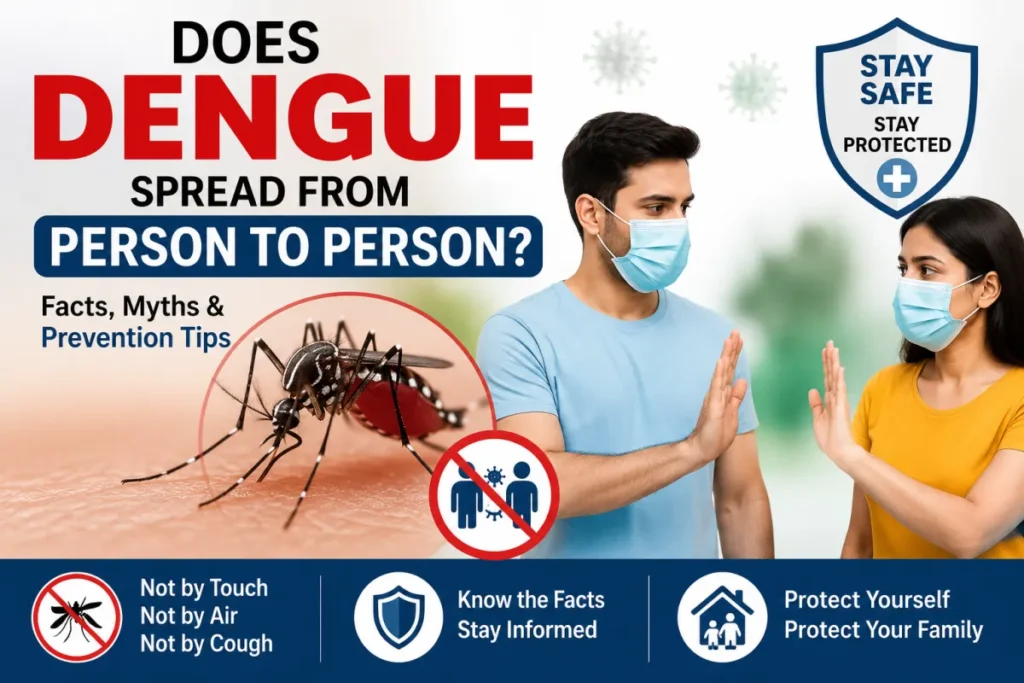
Dengue is one of the most common mosquito-borne viral infections, especially in tropical and subtropical regions. Every year, many people become infected during the dengue season, and one common question often comes to mind: Does dengue spread from one person to another?
The simple answer is no, dengue does not normally spread through direct person-to-person contact. You cannot usually get dengue by sitting beside an infected person, shaking hands, sharing food, or staying in the same room. Dengue mainly spreads through the bite of an infected Aedes mosquito, especially Aedes aegypti.
However, there is an important connection between an infected person and mosquitoes. A mosquito can bite someone who has dengue virus in their blood, become infected, and later pass the virus to another person. This is how dengue can spread quickly within families, neighbourhoods and communities.
Better Latest Content: Overview of Dengue Spread
| Topic | Details |
|---|---|
| Main cause | Dengue virus (DENV) |
| Main carrier | Infected female Aedes mosquito |
| Common mosquito | Aedes aegypti |
| Direct human-to-human spread | No, not normally |
| Main transmission | Bite of an infected mosquito |
| Mosquito breeding places | Water-filled containers and stagnant water |
| Common symptoms | Fever, headache, body pain, nausea and rash |
| Prevention | Avoid mosquito bites and remove breeding sites |
Does Dengue Spread Directly From Person to Person?
Dengue is not considered a directly contagious disease. This means an infected person does not normally pass dengue to another person through coughing, sneezing, touching, hugging or sharing utensils.
For example, if one member of a family has dengue, other family members do not become infected simply because they are taking care of that person. The real concern is mosquitoes. If an infected mosquito is present in or around the house, it can bite the dengue patient, pick up the virus and later infect another person.
This is why dengue cases can sometimes appear one after another in the same family or neighbourhood. It may look like the disease is spreading directly between people, but the mosquito is usually responsible for continuing the transmission cycle.
How Does Dengue Actually Spread?
The dengue transmission cycle is quite simple.
First, a female Aedes mosquito bites a person who already has dengue virus circulating in their blood. The mosquito takes a blood meal and picks up the virus.
The virus then multiplies inside the mosquito. After the virus reaches the mosquito’s salivary glands, the mosquito becomes capable of infecting another person. WHO says this process generally takes around 8–12 days, depending on conditions such as temperature.
When the infected mosquito bites another person, the virus can enter that person’s bloodstream. That person may then develop dengue after the incubation period.
So, the basic cycle is:
Dengue-infected person → mosquito bites → mosquito becomes infected → mosquito bites another person → dengue infection
This is the main reason mosquito control is so important during dengue outbreaks.
Can a Dengue Patient Infect Mosquitoes?
Yes. This is an important point that many people do not know.
A person with dengue can have dengue virus circulating in their blood. If an Aedes mosquito bites that person during this period, the mosquito may become infected. WHO notes that mosquitoes can acquire the virus from people who have symptoms, people who are about to develop symptoms, and even some people who have no symptoms.
The risk is particularly important around the time when the virus is present in the blood. Therefore, someone suffering from dengue should also try to avoid mosquito bites.
Using mosquito protection is not only about protecting the patient. It can also help prevent mosquitoes from picking up the virus and spreading it to other people.
Why Can Dengue Spread Among Family Members?
Suppose one person in a household develops dengue. Other family members may worry that they will catch it from the patient.
The patient does not normally transmit dengue directly. But if mosquitoes are breeding nearby, the situation can become risky.
For example, an infected mosquito may bite the patient and later bite another family member. If the mosquito is capable of transmitting dengue, the second person may become infected.
Aedes mosquitoes often live close to people and can breed in small amounts of standing water around homes. Water stored in containers, discarded bottles, tyres, flowerpots and other objects can provide suitable breeding places.
This is why finding and removing stagnant water around the home is one of the most useful steps during dengue season.
Can Dengue Spread Through Touching or Sharing Food?
No. Dengue is not normally spread through ordinary physical contact.
You do not generally get dengue by:
- Shaking hands with a dengue patient
- Sitting next to an infected person
- Hugging or touching the patient
- Sharing food or drinking water
- Using the same plates or glasses
- Talking to someone who has dengue
- Staying in the same house with a patient
The important exception is that there are rare non-mosquito transmission routes. WHO reports that dengue transmission has occasionally been associated with blood products, organ donation and transfusion. Maternal transmission from a pregnant woman to her baby is also possible, although it is uncommon.
These are different from everyday household contact and should not be confused with normal person-to-person spread.
What Symptoms Can Dengue Cause?
Dengue symptoms can vary from person to person. Some infected people may have no symptoms at all, while others can develop a noticeable illness.
Common symptoms include:
- High fever
- Headache
- Pain behind the eyes
- Muscle and joint pain
- Nausea or vomiting
- Skin rash
- Weakness and tiredness
WHO says dengue symptoms commonly last around 2–7 days, although recovery can take longer.
Most people recover, but dengue can sometimes become severe. Warning signs can include severe abdominal pain, persistent vomiting, bleeding, extreme weakness or restlessness, and other signs of serious illness. Anyone with suspected dengue who develops warning signs should receive medical attention promptly.
How Can You Protect Yourself From Dengue?
Since mosquitoes are the main route of transmission, preventing mosquito bites is one of the best ways to reduce the risk.
Keep doors and windows protected where possible, use mosquito nets or other mosquito-control measures, and wear clothing that covers the arms and legs when practical.
It is equally important to remove places where mosquitoes can breed. Check your home and surroundings for containers holding water. Empty and clean such containers regularly, cover stored water properly and dispose of items that collect rainwater.
Remember that the Aedes mosquito can breed around homes, so dengue prevention is not only a matter for outdoor areas. Mosquitoes can also be found indoors.
Why Mosquito Control Is So Important
Dengue prevention cannot depend only on keeping infected people away from others. Since direct human-to-human transmission is not the usual route, controlling mosquitoes is a major part of reducing dengue transmission.
If fewer mosquitoes are available to bite infected people and then healthy people, the transmission cycle becomes harder to continue.
This is particularly important during outbreaks, when many people in the same locality may have dengue. Removing stagnant water, reducing mosquito breeding areas and protecting people from mosquito bites can help lower the risk.
Final Takeaway
So, does dengue spread from person to person? Under normal circumstances, no. Dengue does not spread directly through touching, coughing, sneezing, sharing food or being close to an infected person.
The main route is an infected Aedes mosquito. The mosquito picks up dengue virus when it bites an infected person and can later transmit the virus when it bites another person.
Therefore, if someone in your family has dengue, there is no need to isolate them simply because of fear of direct transmission. Instead, focus on protecting the patient and other family members from mosquito bites and removing mosquito breeding sites around the home.
If dengue is suspected, medical advice should be sought, especially if the person develops warning signs or symptoms become worse.
FAQs About Dengue Transmission
1. Can dengue spread by touching an infected person?
No. Dengue does not normally spread through touching, hugging, shaking hands or sitting near an infected person. The main route is the bite of an infected Aedes mosquito.
2. Can I get dengue by sharing food with a dengue patient?
No. Sharing food, plates or drinking glasses with a dengue patient is not a normal way of getting dengue. The primary transmission route is an infected mosquito bite.
3. Can a dengue patient infect other mosquitoes?
Yes. When dengue virus is circulating in a patient’s blood, a mosquito that bites the person can pick up the virus. That mosquito may later transmit dengue to another person.
4. Should a dengue patient be kept away from family members?
Dengue patients do not normally need to be isolated from family members because of direct person-to-person transmission. However, they should be protected from mosquito bites so mosquitoes do not acquire the virus from them and spread it further.
5. What is the best way to prevent dengue?
The most important steps are to avoid mosquito bites and remove mosquito breeding places. Empty standing water, keep water containers covered, clean containers regularly and use suitable mosquito protection.